

by Patricia Wall – The Club at Woodbridge
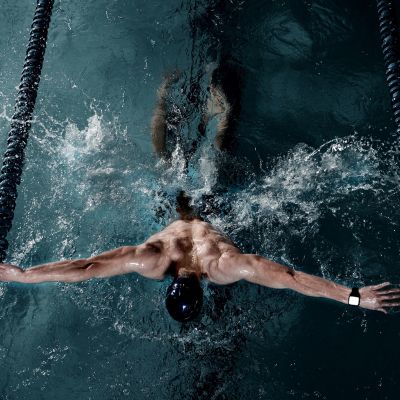
In the first part of our series, we explored why swimming is an ideal cross-training exercise. Now, let’s dive into specific workouts to help you maximize your time in the pool and review additional tips to ensure you’re swimming effectively.
Endurance-Building Laps
Endurance is crucial for runners, cyclists, and athletes of all kinds. Start with 20-30 minutes of continuous laps, mixing strokes like freestyle, backstroke, and breaststroke to engage a variety of muscle groups. This builds aerobic capacity without the wear and tear that running or cycling can cause. According to triathlon trainer Tom Gallagher, “Endurance swimming teaches the body to use oxygen efficiently, which translates well to endurance sports and enhances overall cardiovascular resilience.”
Interval Training for Speed
For athletes focused on speed and agility, interval training in the pool can improve cardiovascular capacity and sprinting abilities. Try swimming 50 to 100 meters at a fast pace, followed by a brief rest of 15-30 seconds. Repeat this for 10-15 sets. This type of high-intensity interval training (HIIT) mimics the intervals of sprinting but is gentler on your body, giving you a cardio boost without the impact. You’ll see benefits in both speed and endurance when you hit the road or trail.
Resistance Training with Pool Equipment
Water provides natural resistance, but you can increase the challenge using tools like kickboards, pull buoys, hand paddles, or resistance bands. Kickboard exercises, for example, isolate and strengthen your legs, enhancing power for activities like running, hiking, and cycling. Pull buoys target the upper body, promoting strength in the arms, chest, and shoulders. This balanced approach to resistance in the water builds muscle endurance and strength that translate well to dry-land activities.
Core-Targeted Drills
Building core stability is essential for strong and balanced performance in any sport. Water-resistance core exercises, such as dolphin kicks, flutter kicks, and sculling drills, are excellent for activating the abdominal muscles. With a strong core, you’ll enjoy better posture, form, and control both in the water and on land. Adding a few core-targeted exercises to your swim routine can also help you stay injury-free in sports that place demands on your midsection.
Plyometric Water Exercises
To work on explosive power, try plyometric exercises like squat jumps and tuck jumps in the shallow end of the pool. The resistance of the water provides low-impact force, making it gentler on your joints while challenging your muscles. These exercises can help build the fast-twitch muscle fibers needed for explosive moves in sports like basketball, soccer, or track events.
Recovery and Relaxation
Swimming isn’t just a workout; it’s also a valuable recovery tool. End your session with 5-10 minutes of gentle, low-intensity swimming or simply floating to relax your muscles and improve blood flow. The natural water pressure aids circulation, which can reduce muscle soreness and speed up recovery after high-impact activities. For runners and cyclists, a recovery swim can be a perfect way to stay active between intensive workouts without putting extra strain on the body.
Additional Tips for Swimming Properly
- Perfect Your Kick: Avoid wide, energy-draining kicks. Keep your legs close together, straight but relaxed, and let your ankles naturally flex to maximize power and efficiency.
- Mind Your Stroke Technique: For freestyle, focus on keeping your elbow high during the pull phase to generate more force and reduce drag. Practice a smooth, rhythmic stroke that doesn’t disrupt your momentum in the water.
- Practice Breathing on Both Sides: Bilateral breathing (alternating sides) helps balance your stroke, distributes effort across your shoulders, and reduces tension on one side of your neck. It also improves your body’s alignment in the water, leading to a more streamlined position.
Adding swimming to your weekly cross-training routine can yield impressive results, enhancing everything from strength and flexibility to cardiovascular health and mental well-being. Dive in and experience how the pool can elevate your performance in ways that land-based training alone cannot!